
Review · ROME VESPA TOURS
Vespa Tour – The Essence of Rome
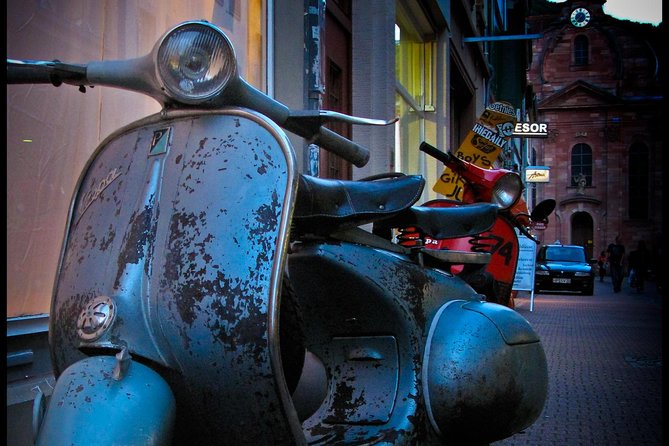
Rome makes more sense from a Vespa. In three hours, you can pass the Colosseum, Trevi Fountain, Pantheon, Piazza Navona, and St. Peter’s Square without spending the day walking between them. The route mixes famous monuments with small streets and quick stops, giving you a lively first look at the city.
I like the private group format, which keeps the ride personal and lets the guide adjust the pace. I also like the choice of riding alone or sharing one Vespa, with the scooter, helmet, and fuel included. The main caution is clear: Rome traffic is not for beginners. You need strong city-scooter experience, a minimum age of 21, and a valid B driver’s license. US riders need an International Driver’s License.
Key points at a glance
- A fast route through Rome: See 12 major sights in about three hours, with short stops for history, photos, and orientation.
- A real Vespa experience: Ride through Roman streets rather than viewing the city only from a coach or taxi.
- Private group touring: Only your own group participates, with a maximum of 10 people per booking.
- Mostly exterior sightseeing: The focus is on views, explanations, and short walks, not lengthy visits inside monuments.
- Strong riding skills required: Small streets, traffic, and maneuvering make this best for confident scooter riders.
- Helpful local guides: Marco, Vittorio, Ricardo, and Alexander are among the guides praised for their stories, humor, and willingness to stop for photos.
Why a Vespa works so well in Rome
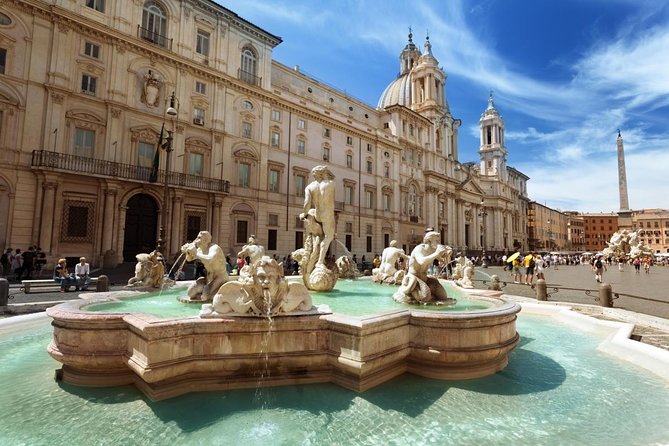
Rome’s sights are spread across a wide area. The Roman Forum and Colosseum sit east of the historic center, while the Vatican lies across the Tiber. Trevi Fountain, the Pantheon, Piazza Navona, and Campo de’ Fiori fill the space between them.
On foot, seeing all of this in one morning or afternoon would mean a lot of walking. By Vespa, you get the movement of a city ride and the chance to stop at the big sights. You also get a feel for Rome’s narrow lanes and busy streets, which is part of the city itself.
This is not a museum-heavy excursion. You will not spend an hour inside the Colosseum or walk through every room of Castel Sant’Angelo. Instead, your guide gives short talks at each stop, points out the important buildings, and lets you decide which places deserve a longer visit later.
I see this as an excellent first-day orientation tour. It helps you learn where Rome’s main sights are before returning on foot to the ones you want to explore in detail.
More Vespa Tours in Rome:
- Vespa Sidecar Tour By Night with Pickup
★ 5.0 · 1,803 reviews - Rome Morning Vespa Sidecar Tour in Rome with Cappuccino
★ 5.0 · 1,771 reviews - Rome: Explore the City by Vespa with an Optional Photoshoot
★ 5.0 · 1,103 reviews
Starting at Largo Argentina and heading toward Ancient Rome
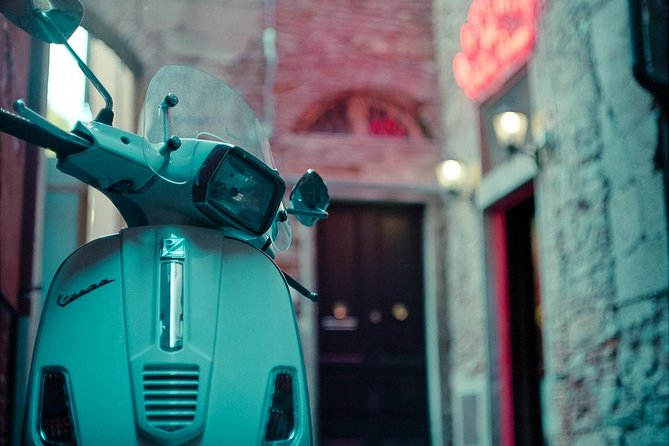
The ride begins with Vespa pickup and a guide meeting near Largo Argentina. The supplied meeting information gives BigaBike, Via di San Calisto 9, as the start point, while the route information also names Vicolo di San Nicola dè Cesarini 4. Confirm the exact meeting address before setting out, since those are different locations.
Largo Argentina is a fitting starting area. Its archaeological ruins sit below street level, and the site gives you an immediate glimpse of Rome’s ancient past. Your first stop is brief, around 10 minutes, so expect an introduction rather than a full archaeological visit.
From there, the route reaches the Roman Forum. The Forum was the center of public life in ancient Rome, and the ruins spread between the Capitoline and Palatine hills. Your guide explains the main remains and helps you understand the layout from outside.
The short stop is useful for orientation, but you should know that admission to the Roman Forum is not included. If you want to walk among the ruins, plan a separate visit and ticket. This tour is better at showing you where the Forum fits into Rome than at replacing a full archaeological visit.
Colosseum and Circus Maximus in quick succession
The Colosseum is the route’s biggest ancient sight. Your guide covers its role as the Flavian Amphitheatre and explains why it became a symbol of Imperial Rome. You also hear about the nearby Arch of Constantine, built in honor of the emperor’s victory.
Again, this is an outside stop of about 10 minutes. You will not enter the Colosseum as part of the tour, and admission is not included. That is a drawback if your main goal is to see the interior. It is also a benefit if you want to avoid spending a large part of your limited Rome time in one site.
After the Colosseum, you ride to Circus Maximus. The long open valley once held chariot races and public events. From here, you get a view toward the Palatine Hill, one of Rome’s Seven Hills and a key area in the city’s ancient story.
Circus Maximus is not as visually complete as the Colosseum, but your guide’s explanation gives the open space meaning. This is a good example of what the tour does best: it links places together so Rome feels like one connected city rather than a set of separate ruins.
The Mouth of Truth and the monuments around Piazza Venezia
The route also includes the church bell tower connected with the Mouth of Truth. The medieval belfry is Rome’s tallest, and the famous stone face is housed nearby. Across the street are the Temple of Hercules Victor and the Temple of Portunus, two ancient temples that are easy to miss when you are moving through the city on foot.
This stop adds variety. You move from imperial ruins to medieval Rome and then to smaller ancient structures. The stop is not numbered in the supplied route, so treat it as part of the sequence between Circus Maximus and Piazza Venezia.
Piazza Venezia brings you into monumental modern Italy. Your guide points out Trajan’s Column, the Vittoriano Monument, the Altare della Patria, Capitoline Hill, the Church of Saint Mark, and Palazzo Venezia.
The Altare della Patria is Italy’s Tomb of the Unknown Soldier. Its bright white stone and enormous scale make it hard to miss. The stop is free and focused on seeing the buildings from the outside, with about 10 minutes for the explanation and photos.
Same streets, a different route through them:
- Rome Vespa Scooter Tour with Professional Photographer
★ 5.0 · 857 reviews - Rome: Highlights Vespa Sidecar Tour with Coffee and Gelato
★ 4.9 · 747 reviews - Rome: Vespa Ride with Pictures and Sweet Tastings
★ 5.0 · 723 reviews - Rome Afternoon Sightseeing Vespa Sidecar Tour with Gourmet Gelato
★ 5.0 · 692 reviews
Trevi Fountain and the Spanish Steps
At Trevi Fountain, the tour slows slightly. You have about 15 minutes to see the Baroque fountain, listen to its story, and take pictures. This is one of Rome’s busiest sights, so a short guided stop helps you focus on the fountain instead of simply arriving, snapping a photo, and leaving.
You can toss a coin over your shoulder for the traditional promise of a return to Rome. It is a small ritual, but it gives the stop a bit of fun after the serious ancient monuments.
The Spanish Steps offer another 15-minute pause. You see the Scalinata di Trinità dei Monti, the church above it, the Fontana della Barcaccia below, and the Column of the Immaculate Conception.
The steps and fountain are best understood as a connected urban setting. Your guide can explain the buildings and the square, while you take in the movement of central Rome. Remember that this remains a short visit, not a long pause to sit and watch the city.
Pantheon and Piazza Navona, Rome’s grand public rooms
The Pantheon is one of Rome’s most impressive buildings, even when viewed during a short stop. Your guide explains its architecture and its long place in Roman history. The tour information lists the stop as free, but it does not promise an interior visit, so confirm the day’s plan if entering matters to you.
The Pantheon works well on this tour because it is compact, visually powerful, and located near several other important sights. Even a brief explanation can help you notice the building’s columns, dome, and unusual sense of proportion.
Piazza Navona gives you more time, around 15 minutes. The long plaza follows the shape of an ancient stadium and includes Bernini’s Fountain of the Four Rivers, the church of Sant’Agnese in Agone, the Fountain of Neptune, and the Moor Fountain.
This is one of the best walking stops on the route. You leave the Vespa briefly and stroll with the guide through a public square filled with art and architecture. The extra time lets you see more than one monument without rushing from one photo point to the next.
Castel Sant’Angelo and St. Peter’s Square
Castel Sant’Angelo is viewed from outside. The building began as the Mausoleum of Hadrian and later took on other roles. Your guide also points out Ponte Sant’Angelo, whose line of angel sculptures leads toward the castle.
The bridge and castle make a strong pair, especially from the river area. The stop takes about 10 minutes and is another exterior visit. If you want to explore the castle’s interior, set aside another visit.
St. Peter’s Square is one of the tour’s major final stops. Your guide explains St. Peter’s Basilica, the central obelisk, and Bernini’s sweeping colonnades. You get about 15 minutes here, enough to take in the great oval space and hear how its design shapes the approach to the basilica.
The tour does not include entry to St. Peter’s Basilica. That distinction matters. A Vespa tour can show you the Vatican setting and give you useful context, but it cannot replace time inside the church or the Vatican Museums.
Finishing at Campo de’ Fiori
The final stop is Campo de’ Fiori, where you can stroll through the daily market. This gives the route a more everyday ending after so many imperial, papal, and monumental sights.
Campo de’ Fiori is a good place to notice how Rome functions as a living city. The market brings food, shopping, and local routines into a route that otherwise centers on famous landmarks. You have around 15 minutes here before returning to the meeting point.
Food and drinks are not included, so plan to buy anything you want separately. The tour ends back at the starting point, which makes it easier to continue your day from the same part of Rome.
What the guides add to the ride
The guide can make or break a fast sightseeing route. The most praised guides include Marco, Vittorio, Ricardo, and Alexander. Marco is described as careful about pacing, riding slowly enough for the group and pulling over when needed. He also made time for photo stops.
Vittorio is praised for his enthusiasm and humor, including a playful wo-wo-wo-wo-wo call while moving through traffic. Ricardo, who is also described as the shop owner, is noted for friendliness and personal attention. Alexander is a useful choice for German-speaking riders, since he speaks both English and German.
You should not assume you will receive a particular guide unless the provider confirms it. Still, these names show the sort of guiding style to expect: history at each major stop, practical help during the ride, and a willingness to make the experience feel personal.
The route is conducted in English. It is a private activity, so only your group takes part, with a maximum of 10 people. That is a better setup than joining a large convoy, especially in Rome’s narrow streets.
Is $137.80 a fair price?
At $137.80 per person, this is not the cheapest way to see Rome. The price includes the Vespa, helmet, fuel, and professional guide. It does not include hotel transport, food, drinks, or admission to attractions.
The value depends on what you want from the day. If you want a fast overview with a private guide, the price can make sense. You are paying for transport between far-flung sights, a small group, and a guide who explains what you are seeing.
If your goal is to enter the Colosseum, Roman Forum, Pantheon, Castel Sant’Angelo, and St. Peter’s Basilica, this tour will not cover that plan. You would need extra tickets and separate visits. Think of this as a moving introduction, not an all-access sightseeing pass.
The tour is booked an average of 28 days ahead, so reserve early if your Rome dates are fixed. Free cancellation is available when you cancel at least 24 hours before the start time. Changes or cancellations inside that window are not accepted for a refund.
Who should book this Rome Vespa tour?
I would recommend it to confident scooter riders who want to see many major sights without spending hours on foot. It also suits first-time visitors with only a few days in Rome, couples who like private touring, and returning visitors who want a different view of familiar places.
It is less suitable for anyone who has never ridden a scooter in traffic. The route includes busy roads, small streets, and the need to keep pace with the guide. You must be at least 21, hold a B driver’s license, and US citizens need an International Driver’s License.
Smart casual clothing is required. Since you are riding and stopping for short walks, choose clothing that lets you move easily and wear secure shoes. Helmets and fuel are provided.
Final verdict: a fast, fun first look at Rome
Book this tour if you want the thrill of moving through Rome by Vespa and are comfortable handling city traffic. You will see an impressive range of places in three hours, from Largo Argentina and the Forum to Trevi, Piazza Navona, St. Peter’s Square, and Campo de’ Fiori.
Skip it if your priority is going inside monuments or if you lack strong scooter experience. For the right rider, this is an energetic way to get oriented, hear Rome’s story from a local guide, and decide which sights deserve a longer visit later.
FAQ
How long does the Vespa tour last?
The tour lasts approximately three hours.
What is included in the price?
The price includes use of a Vespa, helmet, fuel, and a professional guide.
Can I ride alone or share a scooter?
You can choose to ride alone or have two riders share one scooter.
Is the tour conducted in English?
Yes. The experience is offered in English.
What license do I need to ride?
You need a B driver’s license. US citizens need an International Driver’s License.
What is the minimum age?
The minimum age is 21.
Is this a private tour?
Yes. Only your group participates, with a maximum of 10 people per booking.
Does the tour include entry to the Colosseum or Roman Forum?
No. Admission to the Colosseum and Roman Forum is not included.
Are hotel pickup and drop-off provided?
No. Hotel pickup and drop-off are not included. The tour ends back at the meeting point.
Can I cancel for a full refund?
Yes, if you cancel at least 24 hours before the experience start time. Cancellations made less than 24 hours in advance are not refunded.
Newest rides around Rome
- Rome: Guided Vespa Experience with Professional Photoshoot★ 5.0 · 26 reviews
- Rome Vespa Primavera 125 cc Rental – 72 Hours Rental★ 5.0 · 29 reviews
- Rome in Style: Panoramic Vespa Experience with Licensed Driver★ 4.5 · 30 reviews
- Vespa Sidecar Tour: Highlights of Rome★ 4.5 · 34 reviews
- Rome Vespa Sidecar Tour — 90-Minute City Highlights Tour★ 5.0 · 31 reviews
- Vespa – Wine and Photography service in Rome★ 5.0 · 32 reviews
- Authentic Rome Vespa Tour /See the Eternal City Like a Local★ 4.8 · 31 reviews
- Rome: Evening Fiat 500 and Vespa Prosecco Tour★ 5.0 · 34 reviews
Rome Vespa Tours, compared.
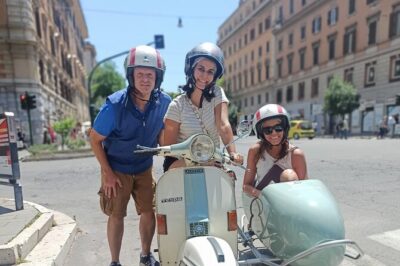
Vespa Sidecar Tour By Night with Pickup
Read our review →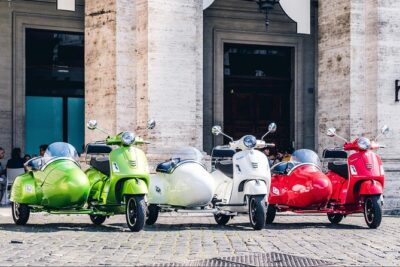
Rome Morning Vespa Sidecar Tour in Rome with Cappuccino
Read our review →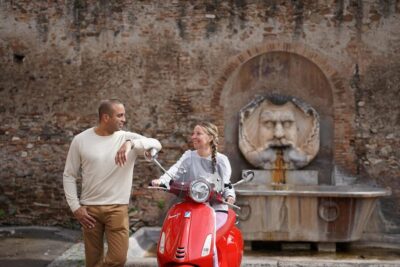
Explore the City by Vespa with an Optional Photoshoot
Read our review →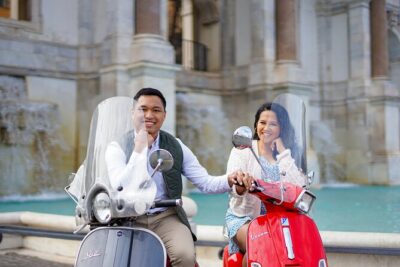
Rome Vespa Scooter Tour with Professional Photographer
Read our review →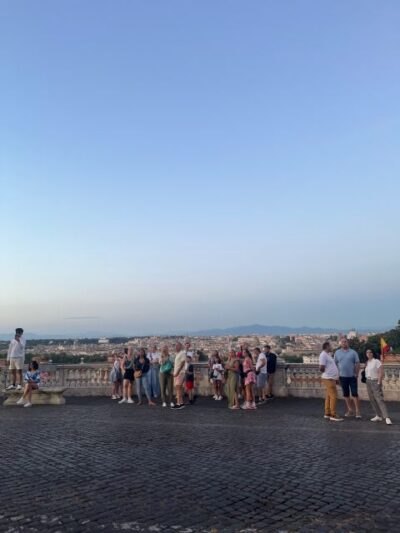
Highlights Vespa Sidecar Tour with Coffee and Gelato
Read our review →
Vespa Ride with Pictures and Sweet Tastings
Read our review →
Vespa Tour with Photo services Small‑Group Highlights
Read our review →
Vespa Sidecar Tour In Rome with Pickup, Drop-off, Gelato included
Read our review →Browse the lists this tour appears in